Our Blog
Blogs Europe's New Entry/Exit System (EES): What Every Non-Schengen Traveller Must Know And How to Beat the Queues
Europe's New Entry/Exit System (EES): What Every Non-Schengen Traveller Must Know And How to Beat the Queues
If you are travelling to Europe from outside the Schengen Area in 2026, you need to know about the EU's new Entry/Exit System and you need a plan to deal with it.
Since its full rollout on 10 April 2026, the EES has triggered border queues of two to four hours at major European airports. Passengers have missed onward connections. Families have stood in lines longer than their actual flights. Industry bodies representing airlines and airports have written to the European Commission demanding emergency relief measures. Ryanair's CEO publicly called the rollout a "shambles."
This is not a temporary teething problem. It is the new normal at Europe's borders at least for now. And for non-EU travellers arriving this summer, it means one thing: arriving unprepared is no longer an option.
Here is everything you need to know about EES, which airports are worst affected, who is impacted, and most importantly how VIPAirAssist's premium meet and greet and fast-track concierge services help you navigate it all without wasting hours of your trip standing in line.
What Is the EES? A Plain-Language Guide
The Entry/Exit System (EES) is a new EU-wide digital border management programme that replaces the old system of manual passport stamping for non-EU nationals crossing the Schengen Area's external borders.
Launched: 12 October 2025 (phased rollout) Fully operational: 10 April 2026 at all external border crossing points across 29 European countries
Under EES, every time an eligible traveller enters or exits the Schengen Area, the following data is recorded:
- Full name and travel document details
- Facial image (biometric photograph)
- Fingerprints (up to four fingers)
- Date, time, and location of each entry and exit
- Any refusals of entry
This data is stored in a centralised EU-wide database for three years and is accessible to border authorities across all participating Schengen countries.
Who Does EES Apply To?
EES applies to non-EU, non-EEA nationals travelling to the Schengen Area for short stays including:
- Citizens of the United Kingdom (post-Brexit)
- US, Canadian, and Australian passport holders
- Travellers from the UAE, Saudi Arabia, and Gulf states
- Citizens of India, China, Brazil, and other non-Schengen countries
- All third-country nationals with a Schengen visa or short-stay visa exemption
EES does not apply to EU, Swiss, or EEA nationals, nor to those holding valid Schengen residence permits.
What Happens at the Border Under EES?
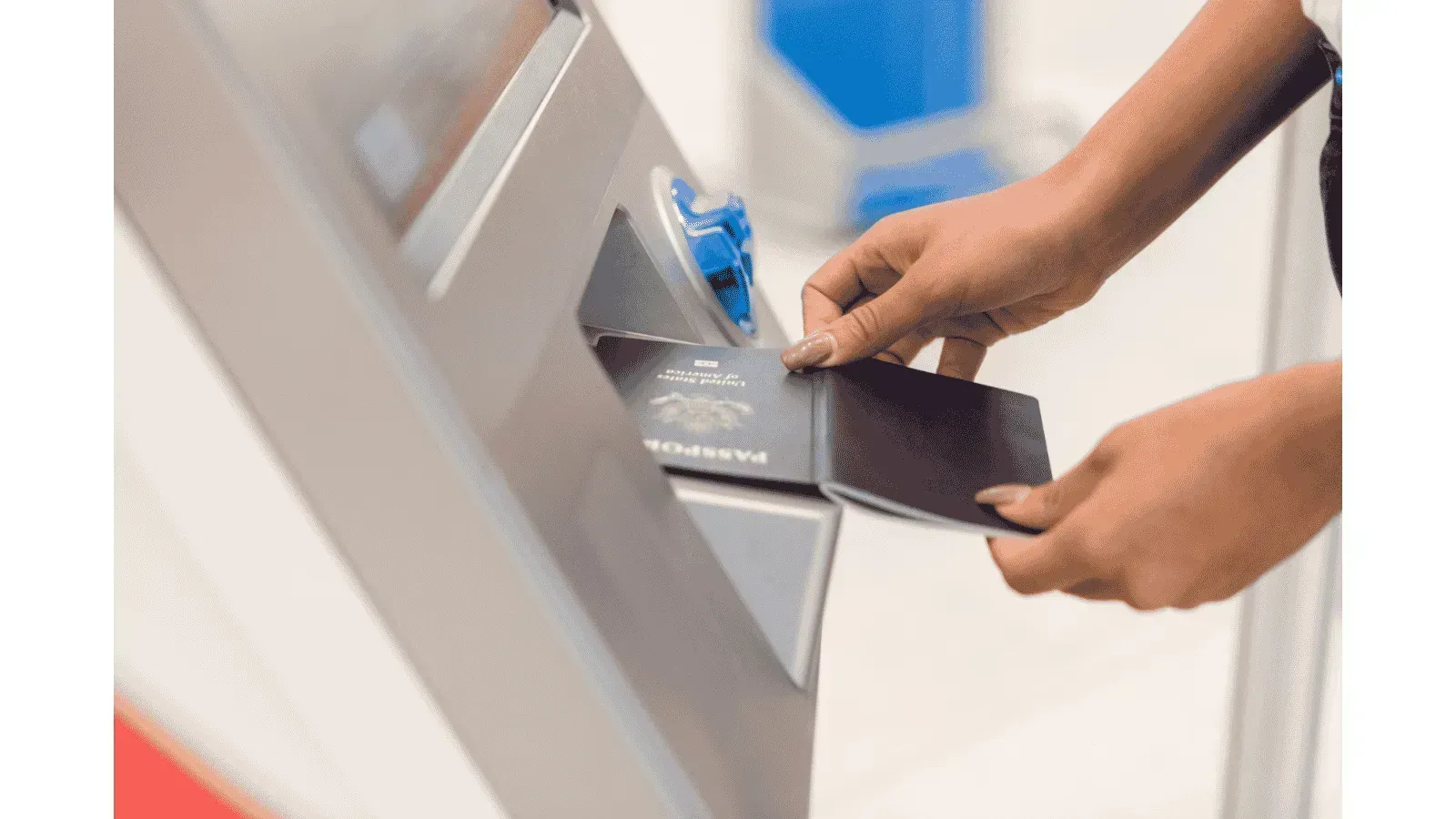
On your first entry into the Schengen Area under EES, border officers (or self-service kiosks where available) will:
- Scan your biometric passport
- Capture a facial image
- Collect fingerprints from up to four fingers
- Verify your data against the central EES database
- Record your entry details
On subsequent entries within three years, your biometric data is already stored, so only a verification scan is needed. In theory, this speeds things up over time. In practice, the first-registration process is adding significant time to every border crossing and that is where the queues are building.
Why EES Is Causing Chaos at European Airports Right Now
The EES was designed to streamline border management over time, but the transition period has been far from smooth. Here is what is actually happening at airports across the Schengen Area this spring and summer:
Processing times have increased dramatically. According to Airports Council International data, processing times at some European airports increased by 70% following EES introduction due to the additional steps required for biometric data collection.
Queues of 2–4 hours are now common. Since the full rollout on 10 April 2026, queues of two to four hours at major European airports have become a documented reality, not an outlier.
Passengers are missing flights. Reports of stranded passengers missing onward connections and domestic transfers surfaced almost immediately after the April 2026 full rollout.
Airports are advising unprecedented early arrival. Brussels Airport, for example, has advised all non-Schengen passengers to arrive at least three hours before departure a recommendation that would have been unthinkable at most modern European airports just a year ago. Paris CDG, Lisbon, and Málaga have issued similar guidance.
Infrastructure has not kept pace. At some airports, notably during the October 2025 launch, authorities instructed border officers to collect biometric data manually rather than through self-service kiosks, causing severe backlogs. System technical issues have been reported across multiple sites.
Which Airports Are Most Affected by EES Delays?
Disruption has been widespread but not uniform. The airports experiencing the most severe EES-related congestion include:
Paris Charles de Gaulle (CDG) — France's Parafe e-gates were initially incompatible with UK and US passports for EES processing. CDG is one of Europe's highest-volume international hubs, making delays here particularly impactful for travellers from the Americas, the Gulf, and Asia.
Amsterdam Schiphol (AMS) — A major gateway for long-haul arrivals connecting onward across Europe, Schiphol has reported significant delays in its non-Schengen passport control areas since April 2026.
Madrid Barajas (MAD) and Barcelona El Prat (BCN) — Spain's largest airports have significant non-EU passenger volumes. AENA, Spain's airport operator, now publishes live queue data every 30 minutes, itself an indication of how serious the situation has become.
Lisbon Humberto Delgado (LIS) — Lisbon has seen persistent delays and is one of the early airports testing the Frontex-developed pre-registration app as a mitigation measure.
Frankfurt (FRA) and Munich (MUC) — Germany's aviation hubs have seen congestion in non-Schengen immigration areas, though pure international-to-international transit passengers are not affected.
Prague Václav Havel (PRG) — One of the first airports to fully implement EES in October 2025, Prague reported queues of up to 90 minutes on launch day, with congestion continuing into 2026.
Rome Fiumicino (FCO), Milan Malpensa (MXP), Athens (ATH), and most major Southern European gateways — have all reported increased processing times.
How VIPAirAssist Helps You Navigate EES Without the Wait
At VIPAirAssist, we have been monitoring the EES rollout closely since its launch and have updated our premium concierge services to ensure our clients experience the smoothest possible arrival and departure, regardless of how congested the standard immigration queues become.
Here is exactly how our services make the difference:
Dedicated Fast-Track Immigration Assistance
Our airport concierge teams are stationed at the border control areas of our partner airports and are fully briefed on the EES process at each specific location. We guide you through the process step by step — no confusion, no waiting in the wrong queue, no avoidable delays.
At airports where fast-track immigration lanes are available for eligible passengers, our team will position you correctly from the moment you land to maximise every available time advantage.
Meet and Greet at the Aircraft Door
Time starts the moment your aircraft lands. Our VIPAirAssist representatives meet you at the aircraft door before the main passenger flow has even reached the terminal and escort you directly through the airport. You are never at the back of a 200-person queue.
This is the single most effective way to beat EES delays: getting to immigration before the crowd, not after it.
Real-Time Flight and Queue Monitoring
Our operations team monitors your flight in real time. We know your arrival status before you land, allowing our ground team to position themselves optimally and ensure zero waiting time on our end. If airport conditions change queues spike, a system goes down, a lane closes we adapt your routing accordingly.
Dedicated Porter and Luggage Management
EES adds time to immigration. The last thing you need is to also be wrestling with luggage, children, or oversized bags through a congested terminal. Our porter team handles every bag from aircraft to transfer vehicle, leaving you free to move quickly and efficiently through the airport.
Lounge Access While You Wait
For clients arriving early or experiencing EES-related delays, VIPAirAssist arranges access to premium airport lounges at our partner airports. Rather than standing in a crowded non-Schengen waiting area, you wait in comfort with refreshments, Wi-Fi, and a quiet space and we come to collect you when it is time to move.
Family Concierge: The Difference EES Makes for Families
EES is particularly stressful for families travelling with young children. Managing passports, biometric registration, pushchairs, hand luggage, and tired children across a congested immigration hall is genuinely exhausting. Our family concierge service provides a dedicated team member for your family from aircraft door to transfer vehicle — handling every bag, every document check, and every moment in between so your trip starts and ends stress-free.
Pre-Departure Concierge: Departing Schengen Under EES
EES applies to exits as well as entries. Departing the Schengen Area now involves an additional biometric exit verification step, and at airports like Brussels that are advising three-hour early check-in, our pre-departure concierge service ensures your check-in, security, and departure gate process is managed efficiently protecting your time and keeping you in the lounge rather than the queue.
Who Should Book a VIPAirAssist EES Concierge Service?
Business and corporate travellers — A two-to-four-hour border queue is not compatible with tight business itineraries. Our fast-track service protects your schedule and ensures you arrive at meetings on time, regardless of what is happening at immigration.
Luxury and VIP travellers — You have invested in a premium travel experience. The standard EES queue is not part of it. VIPAirAssist ensures your European arrival matches the standard of the rest of your trip.
Families with children — Long queues with young children are exhausting and distressing. Our family concierge team removes that stress entirely.
Frequent travellers from the UK, US, UAE, and Gulf states — These traveller profiles are among the highest-volume EES registrations at major European airports. Our teams at UK and Gulf departure airports can also prepare you for what to expect on arrival.
Travellers on tight connections — If your itinerary involves a connection through a Schengen airport, EES delays at immigration can cause you to miss domestic or onward flights. Our team manages your timeline proactively.
First-time visitors to Europe — Navigating a new immigration system in an unfamiliar airport is daunting. Our concierge team provides confidence and clarity every step of the way.
The ETIAS System: What Is Coming Next
EES is not the only change to European border management in 2026. Later this year, the EU is expected to introduce ETIAS — the European Travel Information and Authorisation System — which will require non-EU travellers from visa-exempt countries (including the UK, US, Canada, Australia, and UAE) to obtain a pre-travel electronic authorisation before entering the Schengen Area.
ETIAS is separate from EES but closely connected. Together, they represent a fundamental transformation of how Europe manages its external borders. For frequent travellers, staying ahead of these changes — and having a trusted airport partner who understands them — is increasingly essential.
VIPAirAssist will keep our clients fully informed as ETIAS timelines are confirmed and will update our services accordingly.
6 Essential EES Travel Tips for Non-Schengen Travellers
1. Arrive earlier than you think necessary. Several major European airports are now advising non-Schengen passengers to allow three hours before departure. Build this into your plans.
2. Have your documents ready before you reach the kiosk. Passport, boarding pass, visa documentation (if applicable). Delays at kiosks often happen because travellers are not prepared.
3. First-time EES registration takes longer. If this is your first Schengen entry under EES, expect your border process to take more time than on previous trips. Subsequent crossings will be faster once your biometrics are stored.
4. Check your airport's specific status. EES rollout has been uneven. Some airports have coped better than others. VIPAirAssist's operations team monitors live conditions at all partner airports.
5. Do not rely on general "fast-track" or "meet and greet" services that only cover check-in or security. EES delays happen at immigration. Ensure your concierge service specifically includes immigration assistance. VIPAirAssist's team is positioned at immigration, not just check-in.
6. Book your concierge service in advance. Peak summer 2026 availability at major European airports — Paris, Athens, Nice, Rome — will fill quickly. The earlier you book, the better the service we can arrange.
Book Your EES Concierge Service with VIPAirAssist
Europe's borders have changed. The two-to-four-hour immigration queue is a real and documented feature of Schengen arrivals in 2026 for non-EU travellers. But it does not have to be part of your travel experience.
VIPAirAssist provides premium Meet and Greet, Fast-Track immigration assistance, porter services, lounge access, and departure concierge at major European airports, ensuring that the new EES system is something you read about, not something you experience standing in a queue.
Available 24/7 | All Major Schengen Airports | Families, VIP, Business & Luxury Travellers
Contact us at info@vipairassist.com or visit vipairassist.com to book your service.
VIPAirAssist is a premium airport concierge and meet and greet service operating at major airports worldwide. Our team specialises in fast-track immigration, personalised arrival and departure assistance, and seamless airport experiences for VIP, business, family, and luxury travellers.